Getting started · beginner · 5 min read
How Much Coffee for Cold Brew? The Ratio Math by Batch Size
Cold brew ratio math has two paths, 1:5 concentrate you dilute later, 1:8 ready-to-drink you don't. Gram counts for a 350 ml, 1-liter, and 2-liter batch.
By The Daily Pour Editorial · Reviewed by Editorial Review · Updated 2026-08-10
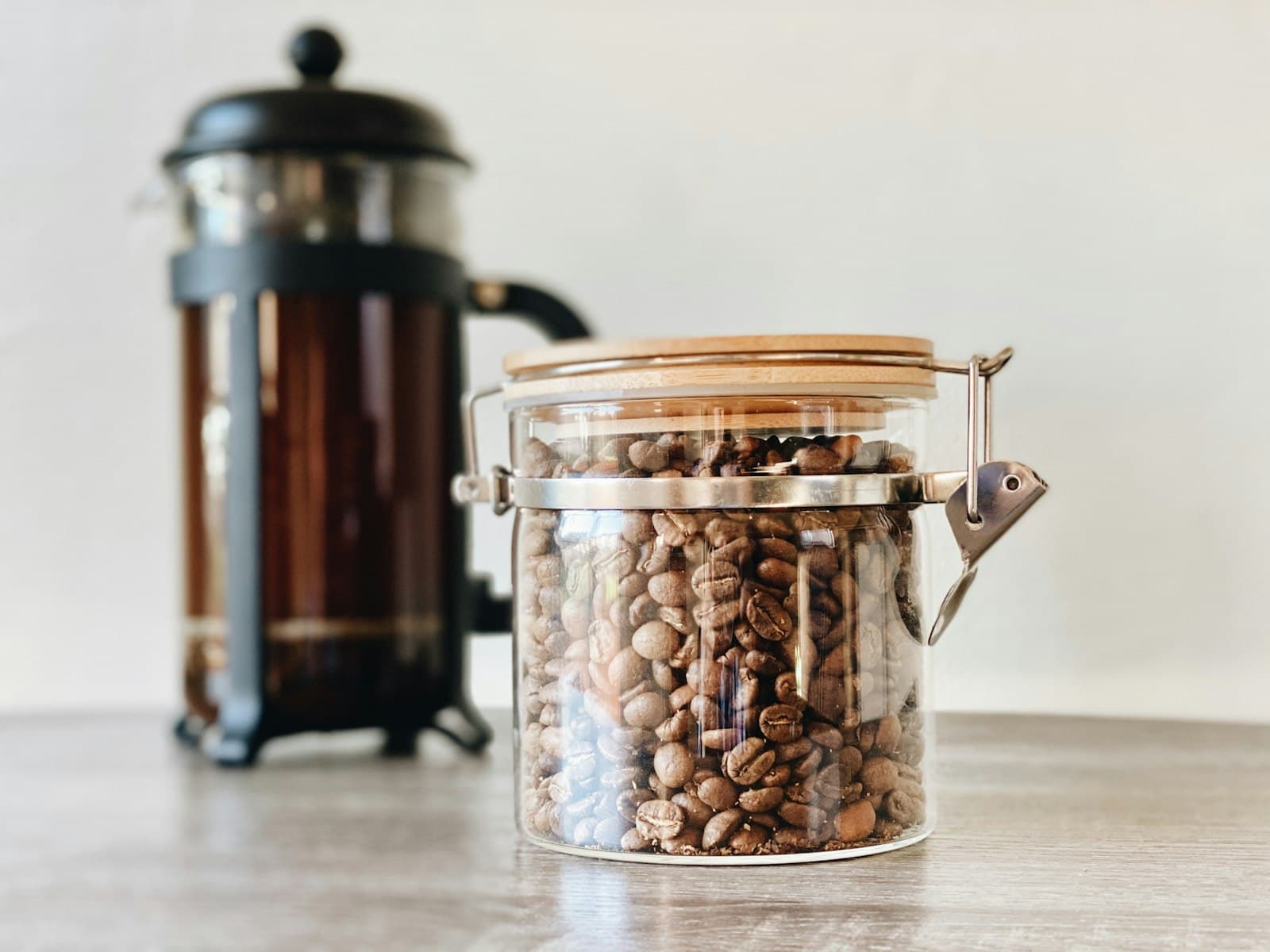
Cold brew hides two different drinks behind one name, and each one wants its own ratio. This is the math behind the site's cold brew ratio calculator tool. Concentrate steeps strong at 1:5 so it can survive dilution later. Ready-to-drink cold brew steeps at 1:8 instead and skips that dilution step entirely. Confuse the cold brew concentrate ratio with the ready-to-drink one and you'll end up with a jar that's either syrupy or embarrassingly thin.
The two ratios, and why they differ
At 1:5, 200 g of coarse coffee steeped in 1000 g (a liter) of cold water makes concentrate strong enough to take a real cut later. Strain it and you won't get a full liter back. Coarse grounds hold onto some of that water, so a 200 g batch usually yields somewhere around 800–900 ml of actual concentrate. Dilute that 1:1 with water or milk and you land close to 1.6–1.8 liters of finished coffee, roughly seven or eight 240 ml servings. Plan your jar and your fridge shelf around that final number, not the liter you started with.
Ready-to-drink skips dilution by brewing at drinking strength from the start. At 1:8, 125 g of coffee in 1000 g of cold water makes a jug you pour straight over ice, no second container, no math at serving time. It's the better choice when fridge space is tight, since a single jug replaces the concentrate-plus-water-jug combo. Concentrate is the better choice when you drink cold coffee daily and want a small container that stretches for two weeks instead of one that empties in three days.
| Batch size | Style | Coffee | Water |
|---|---|---|---|
| 350 ml jar | Concentrate (1:5) | 70 g | 350 g |
| 350 ml jar | Ready-to-drink (1:8) | 44 g | 350 g |
| 1 liter | Concentrate (1:5) | 200 g | 1000 g |
| 1 liter | Ready-to-drink (1:8) | 125 g | 1000 g |
| 2 liters | Concentrate (1:5) | 400 g | 2000 g |
| 2 liters | Ready-to-drink (1:8) | 250 g | 2000 g |
Scales
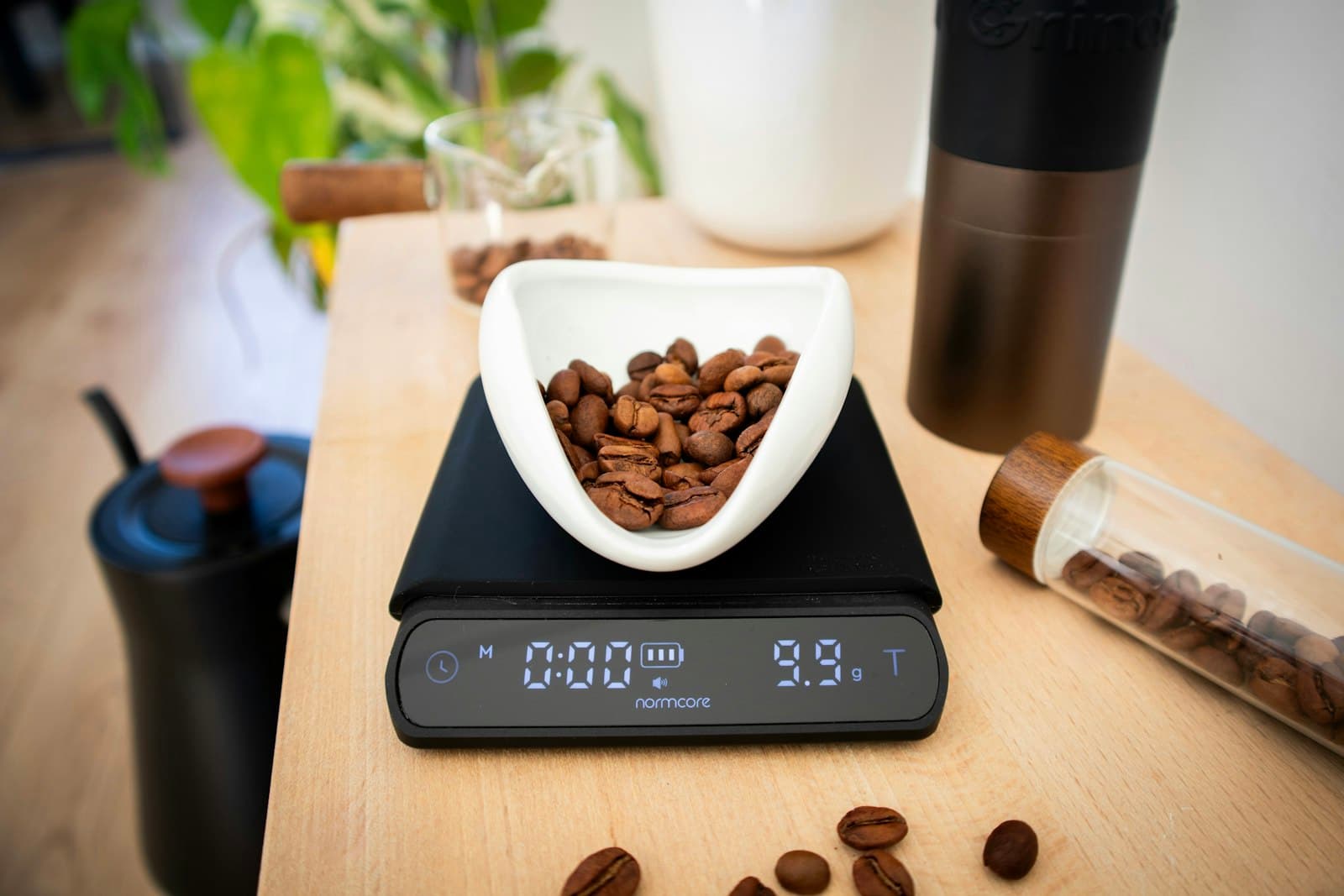
0.1 g coffee scale with timer
Cold brew's batch sizes swing from 70 g up to 400 g of coffee depending on the jar, and a scoop can't track that range accurately. A 0.1 g scale catches the difference between 70 g and 75 g that a measuring cup never will, and its built-in timer doubles as a reminder for the 14–18 hour steep. It won't fit a two-liter batch's whole jug on the platform at once, so you're still taring in stages for the biggest jars.
Weighing your coffee and water is the cheapest fix for cups that taste different every day. The built-in timer handles pour-over pacing, and 0.1 g resolution is plenty for anything you'd brew at home.
Worth knowing: The membrane buttons can lag when they're wet
This piece sticks to the ratio math. Grind size, steep time, and straining live in the site's cold brew guide, worth a look before your first batch. If your jar doesn't match any size above, the ratio calculator tool runs the same 1:5 or 1:8 division for whatever batch you're actually making, no mental math required at 11 pm the night before a party.
Take the ratios with you
Join the free newsletter and we'll send the brew ratio cheat sheet, a printable one-pager with ratios, grinds, and times for eight methods.
Keep reading
Brew guide · beginner · 4 min
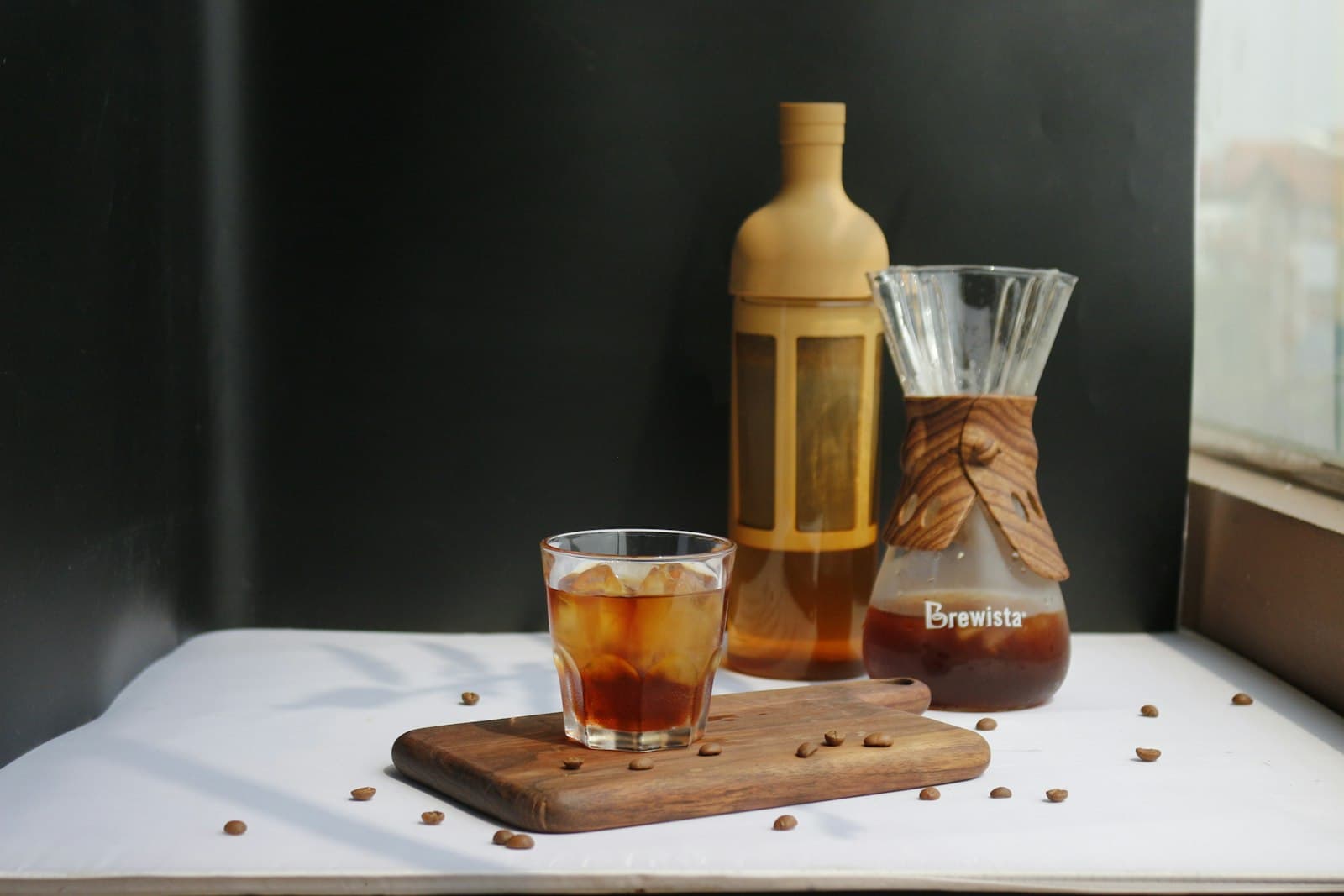
How to Make Cold Brew Concentrate With 10 Minutes of Work
Cold brew is patience disguised as a recipe: the 1:5 concentrate ratio, a 14–18 hour fridge steep, straining without silt, and serving it all week.
Getting started · beginner · 4 min
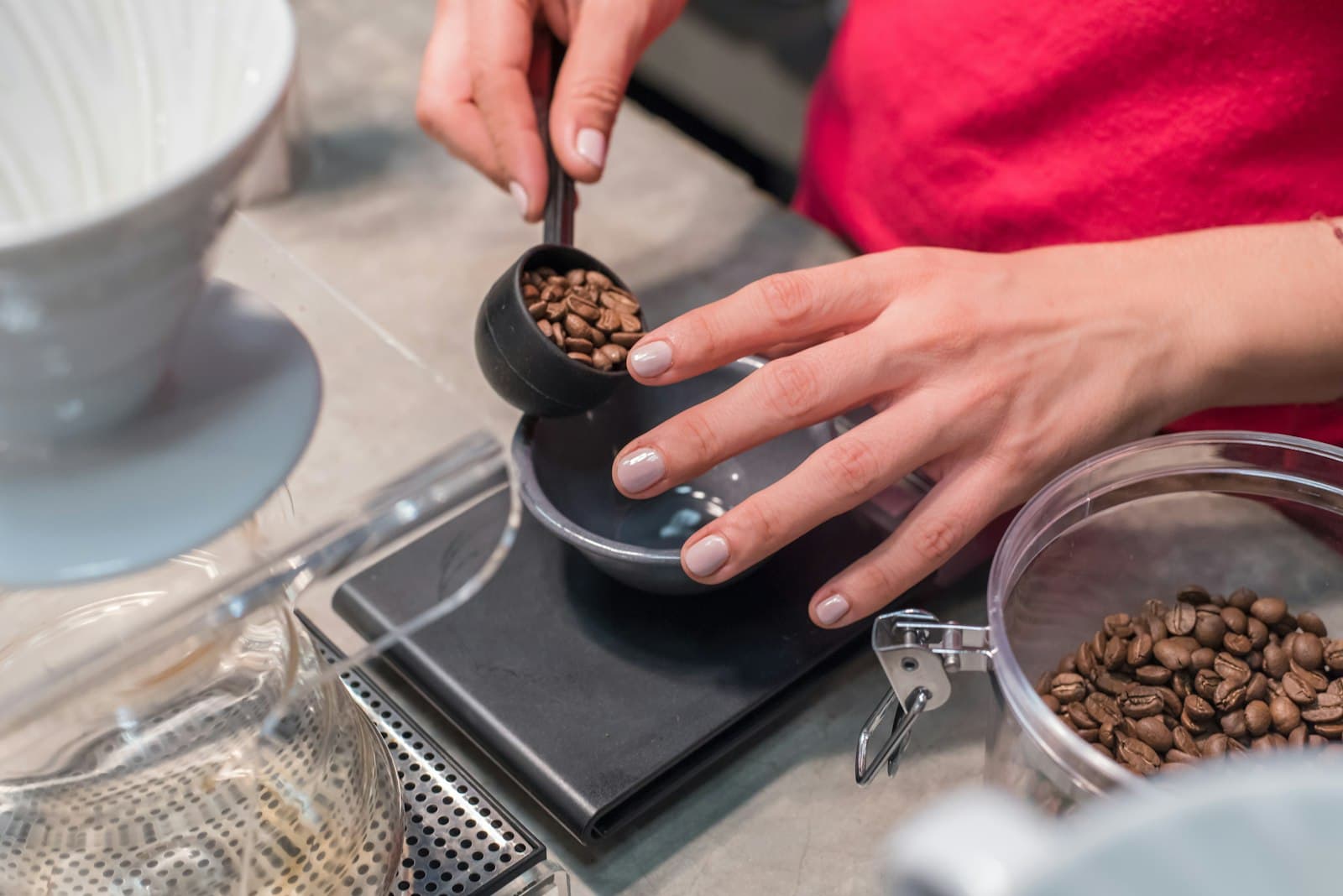
The Coffee to Water Ratio Explained: Why 1:16 Works
One gram of coffee to sixteen grams of water is the reliable coffee to water ratio. How to scale it to any mug, and when to bend it stronger or lighter.
Comparison · beginner · 4 min
Cold Brew or Iced Pour-Over? Two Very Different Drinks
Overnight-smooth or same-day bright? Cold brew steeps for hours; flash brew drips hot onto ice in four minutes. How the two differ, and which fits you.